Russell Street by Cole McInerney

russell
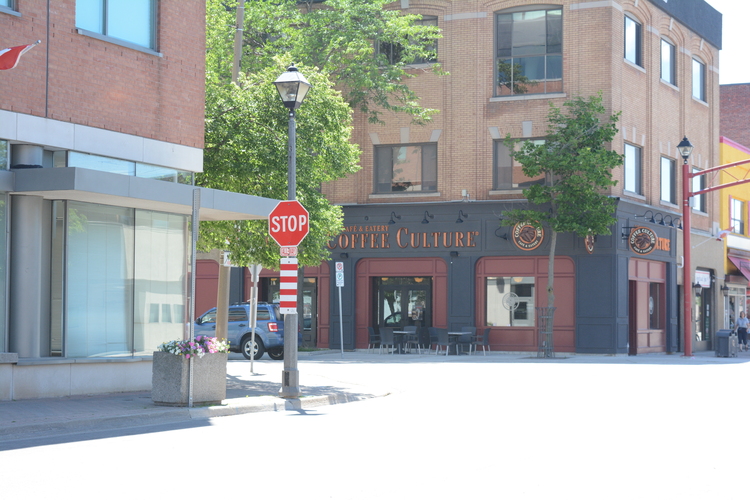
The Europa Hotel in Downtown Niagara Falls. Photo by Cole McInerney


And the street held silence for two strangers who didn’t have to stay that way.
We stood silent below lamplight in the magnetic time. 

Your suburban home stood parched in the dark and didn’t know me well.
Your mother stood at the northern window and pretended to be passing by.
The ten o’clock fireworks stood above the hotels and were heard in a tired sky.
Your roof stood parallel to that forgiving horizon. 

Your car stood locking and unlocking as we collided.
We stood silent across from fire station number three then went around your block again.
And in that silence we don’t celebrate the ending we just end up walking other ways. 


Source: The author, 2021

Russell Street was first published in The Continuist, May 10, 2020

Cole McInerney is a poet from Niagara Falls, Ontario. He studied English at Toronto Metropolitan University. Currently, he is a MFA student at the University of South Carolina, studying poetry. His poems have been published in several print and online publications, including Feral Poetry, White Wall Review, The Bookends Review, and Echolocation Magazine.

Follow Cole McInerney on Instagram

Follow Cole McInerney on Linktr.ee

See all of Cole McInerney’s poems on the Niagara Falls Poetry Project website:

•     The Buildings of the Dream
•     Convenient Corner
•     Lake Erie
•     Russell Street


Sonnet on Niagara by Emmeline Stuart-Wortley

stuart-wortley
Lady Emmeline Stuart-Wortley, 1806-1855. Portrait by Frederick Christian Lewis Sr . Courtesy Wikipedia Commons

Waters of wonder! whose dread cry, profound,
‡‡Is as the world’s voice lifted to the sky!
‡‡A wild, and terrible, and awful cry,
Fall! pealing with a more than sea-deep sound,
Thrills not the earth to thee for leagues around?—
‡‡Art thou not heard into the Eternity?—
‡‡Beyond that upper air that seems to lie
Listening above thee in bright silence bound?
‡‡On plumes of swift imagination borne,
How have I seen thee, mighty cataract! sent
‡‡As ’twere from Heaven to Earth, of strength unshorn!
How have I o’er thy scene o’erpowering bent,
‡‡Adored thy wrathful play and savage scorn,
‡‡Thou won’drous Chaos of one Element!


Source: Emmeline Stuart-Wortley. Queen Berengaria’s Courtesy and Other Poems. London: J. Rickerby–J. Hatchard and Son, 1838

Click here to read a biography of Emmeline Stuart-Wortley

Unheard Niagaras by A. Ethelwyn Wetherald

wetherald
Portrait of Ethelwyn Wetherald. Courtesy of Wikipedia Commons

We live among unheard Niagaras.
The force that pushes up the meadow grass,
That swells to ampler roundness ripening fruit,
That lifts the brier rose, were it not mute,
Would thunder o’er the green earth’s sunlit tracts
More loudly than a myriad cataracts.


Source: Wetherald, A. Ethelwyn. Lyrics and Sonnets, Complete Edition. Toronto: Thomas Nelson & Sons, 1931

Read about Agnes Ethelwyn Wetherald on the Brock University Archives site. Wetherald lived her later years in Pelham, a few miles from Niagara Falls.

The Thing by Bill Hamilton

hamilton
William “Red” Hill Jr and “The Thing” in which he went over the Horseshoe Falls to his death. Photo by Ron Roels. Used by permission of Niagara Falls Public Library


Rapids rage, in furrows to their end and fall,
Off the edge, as if dropping off the face of the earth
And thunder resonates, as foam and mist rise,
Into nature’s cauldron, that churns and abounds.

A family possessed with this mighty river,
Gain fame meeting its constant challenge
Traversing the worst of treacherous rapids
Yet needing to conquer the Cataracts alone.

Their barrels, carrying father and son,
Each defied those waters several times,
Passing through the swirling whirlpool,
Wallowing in the cheers of their success.

Immersed in steel barrels, over they rolled
The tumultuous waves bob them like cork
Captive prisoners’ to nature’s full wrath,
Death looms in those currents…beware!

Father dies and son now takes the torch,
Family honor means pay forward the promise.
The ultimate challenge of Niagara looms,
Over the falls is his next ride to glory.

His commitment made, one year hence
Work starts on his device to conquer.
Inner tubes netted securely with rope,
Named “The Thing”, standing beside it proud.

The August day comes, glory will now, be his.
His crew readies him for his timely journey.
One last wave he enters his creation.
Capped, the darkness opens his mind.

Visions of glory mask the fear he felt.
His vessel rides the rapids, weaving waves,
He rides the path, to the brink, of his desire.
Soon the deafening thunder; he knows he’s close!

A sudden surge and he vanishes in white
His stomach drops with a deadly plunge
And darkened silence brings the end,
To a promise, broken, by a son who dared.

A mother’s cry on the quiet shore of rock
“Where’s my boy what’s happened?”
Brothers scramble to find their daring sibling,
In the waters, churning cold, before them.

Remnants of rubber and frayed broken rope
Leave no doubt as the fate of Red Hill Jr.
Swallowed by a watery tomb, his nemesis.
A day later he is washed to familiar arms.

What tragic price this thing we call honor.
The need to challenge what nature creates.
A family possessed by a river so cruel
Close, but never fulfilling their ultimate goal.

Rapids rage in furrows to their end and fall,
Off the edge as if dropping off the face of the earth
And thunder resonates, as foam and mist rise,
Into nature’s cauldron, that churns and abounds.


A note from Bill Hamilton:

In 1951 Wm. Red Hill Jr. created a barrel-like vessel using large inner tubes surrounded by canvas and secured by netting.  He named this contraption “The Thing”.  His mission, honor a Hill family promise, to ride this device over Niagara Falls. On August 5th he climbed into his creation and was released to his fate. Needless to say, his plight ended in tragedy.  The loss of a son and brother to the Thunderous Cataracts of Niagara!

I own the Red Hill Estate including the 3 Hill daredevil barrels currently on display at the IMAX theatre.

Biography of Bill Hamilton:

My interest in writing started in University at Waterloo. Reactivated by the NOTL Writer’s Circle I have had several of my works published. Poetry is my main passion and my poem “Angel’s Ghost” hangs in Ontario’s oldest tavern the “Angel Inn” in Niagara on the Lake.  I am currently working on an anthology of poetry for publication.

My poem “The Thing” was a topic of interest, as I own the Red Hill estate barrels on display at the IMAX Theatre here in Niagara. I grew up with stories of the many Daredevils of Niagara, which inspired this poem.

On Seeing Niagara to Advantage Found in Walt Whitman; On Revisiting Niagara April 27, 2016 by Carol A. Stephen

From the Quillfyre blog by Carol A. Stephen:

stephen
Header from the Quillfyre blog

Today’s prompt on the Found Poetry Review blog offers a choice of constraints from Montrealer Greg Santos.  Here’s what he’s suggested, every one of them are worth trying:

  1. Dialogue with Ghost:  Find an audio recording of a dead poet or musician. Play the recording. Start writing words that jump in your head, lines of your own. Write a 10-14 line poem using the words you jotted down, either in response to the original poem/song or a completely new piece.
  1. Reverse Poem:  Find a draft of a poem you’ve already written. Rewrite your new poem backwards, writing the last stanza first and so on. The new order might reveal something new and exciting.
  1. Table of Contents Poem: Use the table of contents of any book to find each line for your found poem.
  1. Online Erasure Poem: Go to Wave Books’ Erasures website to find online source texts, with excerpts ranging from Herman Melville’s Moby Dick to The Voyage Out by Virginia Wolf. The cool website lets you click on any word or punctuation mark to make it disappear. You can save, print, or email the newly sculpted text when you’re done.

Today I tried first the Reverse poem.  Two shorter poems did not seem to change much nor for the better, but a longer poem was a little more interesting. I chose a found poem I had done last summer from a prose piece of Walt Whitman’s On Seeing Niagara to Advantage. That poem is here, followed by the reverse version, with some further carving done to it.

The blog post and other poems for this challenge are found here: at Found Poetry Review


SEEING NIAGARA TO ADVANTAGE  by Walt Whitman

June 4, ’80. For really seizing a great picture or book, or piece of music, or architecture, or grand scenery—or perhaps for the first time even the common sunshine, or landscape, or may-be even the mystery of identity, most curious mystery of all—there comes some lucky five minutes of a man’s life, set amid a fortuitous concurrence of circumstances, and bringing in a brief flash the culmination of years of reading and travel and thought. The present case about two o’clock this afternoon, gave me Niagara, its superb severity of action and colour and majesty grouping, in one short, indescribable show. We were very slowly crossing the Suspension bridge—not a full stop anywhere, but next to it—the day clear, sunny, still—and I out on the platform. The falls were in plain view about a mile off, but very distinct, and no roar—hardly a murmur. The river tumbling green and white, far below me; the dark high banks, the plentiful umbrage, many bronze cedars, in shadow; and tempering and arching all the immense materiality, a clear sky overhead, with a few white clouds, limpid, spiritual, silent. Brief, and as quiet as brief, that picture—a remembrance always afterwards. Such are the things, indeed, I lay away with my life’s rare and blessed bits of hours, reminiscent, past—the wild sea-storm I once saw one winter day, off Fire island—the elder Booth in Richard, that famous night forty years ago in the old Bowery—or Alboni in the children’s scene in Norma—or night-views, I remember, on the field, after battles in Virginia— or the peculiar sentiment of moonlight and stars over the great Plains, western Kansas—or scooting up New York bay, with a stiff breeze and a good yacht, off Navesink. With these, I say, I henceforth place that view, that afternoon, that combination complete, that five minutes’ perfect absorption of Niagara—not the great majestic gem alone by itself, but set complete in all its varied, full, indispensable surroundings.

Text from Whitman, W. Specimen Days in America. London: G. Routledge, (1906).  p. 251-251.  View on Hathi Trust


The found poem from the above text:

On Seeing Niagara to Advantage
found in Walt Whitman by Carol A. Stephen

English: Walt Whitman. Library of Congress des...

Walt Whitman.
(Wikipedia)

     June 4, ’80.

Seizing the common sunshine,
the mystery of identity, there comes
some lucky five minutes of  fortuitous concurrence,
circumstance bringing a brief flash of thought about two o’clock.

This afternoon gave me Niagara, superb severity of action, color,
majestic indescribable show. Slowly crossing the Suspension bridge,
not a full stop anywhere, and I out on the platform, the falls in plain view,
a mile distinct, and no roar, a murmur-river tumbling green and white,
the plentiful umbrage, many bronze cedars, shadow tempering
immense materiality. Clear sky, a few white clouds silent.

Brief quiet, a remembrance always afterwards.
I lay away rare and blessed bits of hours,
—the wild sea-storm one winter,
—night-views on the field, after battles
—the peculiar sentiment of moonlight
—stars over Kansas
—a stiff breeze off Navesink.

That afternoon five minutes’ perfect absorption.
Niagara— the great majestic gem complete
in indispensable surround.


And this is the poem I carved out today from the one above:

stephen
Portrait of Carol A. Stephen

On Revisiting Niagara April 27, 2016 by Carol A. Stephen

I lay away rare and blessed bits of hours
brief quiet, a remembrance.

Always afterwards, immense materiality,
clear sky, a few white clouds silent.

The plentiful umbrage, many bronze cedars,
shadow tempering a mile.

No roar, a murmur-river tumbling green and white,
not a full stop anywhere.

Crossing the bridge gave me Niagara,
A brief flash of thought about two o’clock.

Five minutes of identity
seizing the common sunshine.