The gas was on in the Institute,
The flare was up in the gym,
A man was running a mineral line,
A lass was singing a hymn,
When Captain Webb the Dawley man,
Captain Webb from Dawley,
Came swimming along the old canal
That carried the bricks to Lawley.
Swimming along –
Swimming along –
Swimming along from Severn,
And paying a call at Dawley Bank while swimming along to Heaven.
The sun shone low on the railway line
And over the bricks and stacks
And in at the upstairs windows
Of the Dawley houses’ backs
When we saw the ghost of Captain Webb,
Webb in a water sheeting,
Come dripping along in a bathing dress
To the Saturday evening meeting.
Dripping along –
Dripping along –
To the Congregational Hall;
Dripping and still he rose over the sill and faded away in a wall.
There wasn’t a man in Oakengates
That hadn’t got hold of the tale,
And over the valley in Ironbridge,
And round by Coalbrookdale,
How Captain Webb the Dawley man,
Captain Webb from Dawley,
Rose rigid and dead from the old canal
That carries the bricks to Lawley.
Rigid and dead –
Rigid and dead –
To the Saturday congregation,
Paying a call at Dawley Bank on the way to his destination.
Source: Betjeman’s Banana Blush: Sir John Betjeman the Poet Laureate Reads His Verse. Charisma Records, 1973.
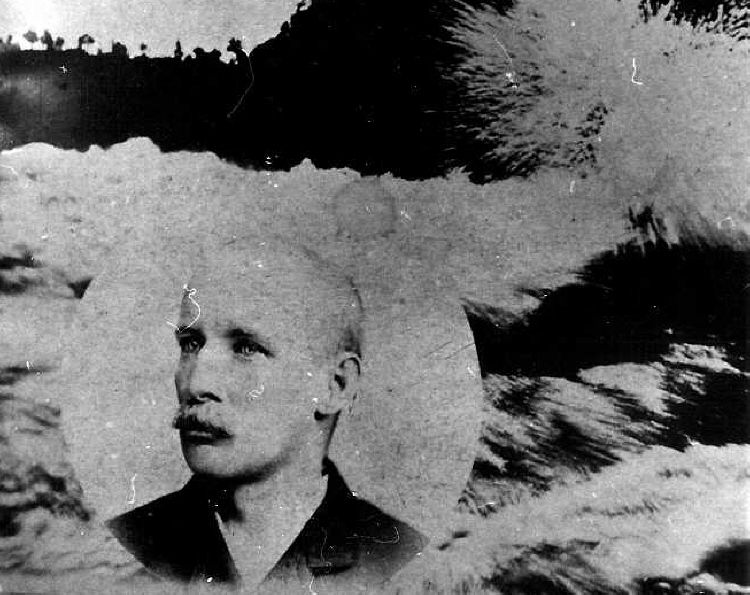
Captain Matthew Webb was a world-renowned swimmer who attempted to swim the Whirlpool Rapids at Niagara Falls on July 24, 1883. He is buried in Oakwood Cemetery, Niagara Falls, New York. Read about Captain Webb here.
Early Morning Mist at Niagara Falls, January 7, 2007. Photo by Andrew Porteus
there is nothing at Niagara
acid burns along the river
the strawberries bloom under the night
when leaves turn towards the sun
and the day star shoots across the water,
there is nothing at Niagara
and my hands are empty
neither straw nor cornflower
not the jet black of crow and raven
the grounds are empty at Niagara
and there is only wind and the soft light pattern
of mist on skin.
I continue to publish poetry in French and consider this work to be essential. My French work is quite different in tone and direction from my English work; it represents, perhaps, the natural extension of my concerns with the natural world and its degradation from multiple causes. I also continue to work with photography, and think of it as an overlapping aspect of my exploration of abstraction and tangential realities.
View another of Moorhead ‘s poems, Niagara weeps, on this website
Niagara weeps, her heart among the dead
and earth still covered in ice and flower
where the mounds for burial are rooted ‡‡in vine
where sun has warmed so many fears, ‡‡so many hearts aching
but Niagara weeps at the crest of joy
at the matting festival of fruit and earth
at the plain song at dusk and the frozen ‡‡waste in concrete
she weeps and the songs are carried ‡‡ceremonial
at the hour of sleeping
when hands and limbs, when eyes and ‡‡lips are cool
and the only song is carried beneath ‡‡the rain.
I continue to publish poetry in French and consider this work to be essential. My French work is quite different in tone and direction from my English work; it represents, perhaps, the natural extension of my concerns with the natural world and its degradation from multiple causes. I also continue to work with photography, and think of it as an overlapping aspect of my exploration of abstraction and tangential realities.
View another of her poems, wind and light, on this website
Horseshoe Falls From the American Side by James Hamilton, 1855. From the National Grid (Formerly Niagara Mohawk Power) Collection. Image courtesy of Niagara Falls Public Library
Hail ! Thou stumendous, trependous waterfall !
O waterfall thou art, and waterway thou seemest to fall !
Infinitudinous thou, infinitesimal I !
Yet do I hold thee in the minute circle of mine eye !
Of thee have other alleged poets sung and sung and sung,
Chanting wild doggerel with unlimbered tongue
And shrieking till they nearly ruptured their little left lung !
But it hath fatefully remained for insignificant me
To do the brown poetical thing, O Niagara by thee !
I’ve done up Highland Lake and Upper Woods and Gettysburg
And even busted quills on wild Van Fredenberg,
But ne’er till now did in me surge the sweet divine afflatus
To tune to minstrelsy my poetico-intellectual apparatus
How doth the misty thunder surge palpitatingly athwart my tympanum auricular
As up the emerald aqueous wall it climbs exactly perpendicular !
Jerusalem ! it would absorb a Webster’s dictionary unabridged
To paint in words yon rapids by the flossy billows ridged.
And now I faint e’en as a reformed toper who would pass
His dearest enemy imprisoned in a crystal glass.
These islands are as fair as Eden ere yet the serpent, Sin,
Had run the pickets and skedaddled in.
The Horseshoe Curve — Great Scott ! how doth the water tumble !
And jumble, and rumble, and everlastingly bumble !
One hundred five and sixty feet in sheer descent
The green flood simply flops h–l bent !
And over half a mile across the gruesome edge
Of that precipitous ledge
The endless water pours and pours and pours,
And unremittingly roars and roars and roars !
And what euphonious cognomenclature
Have thoughtless men bestowed on this crown-glory of the works of mighty nature!
Just think of Goat Island, Bath Island, Three Sisters Islands and Shipman Island
And even Luna Island applied to dainty bits of dry land
Amid the thunders of this glorious flood !
Is’t not enough to make a poet drink the blood
Of the inhuman, misguided creatures
Who thus have named Niagara’s salient features ?
The fall is terrific.
The sound is soporific.
The walks are sudorific.
The baths are frigorific.
The charges of the hacks are calorific.
Niagara is a rare old hieroglyphic.
But I will bottle now my musings in my breast
Till I have killed a guide, carved up a hackman and burned an Indian bazaar, when I can rest !
There, the guide is dead, the hackman rests in peace and the bazaar smoke is mixed with Niagara’s mist,
And they will not be missed !
Adieu, Niagara ! the poet goes, as poets do, forever,
But thy sublime and massive grandeur he’ll remember ever !
Joseph Avery Stranded on Rocks in the Niagara River. Daguerrotype by Platt D. Babbitt, 1853. Courtesy of the Library of Congress
All night long they heard in the houses beside the shore, Heard, or seemed to hear, through the multitudinous roar, Out of the hell of the rapids as ’twere a lost soul’s cries,– Heard and could not believe; and the morning mocked their eyes, Showing, where wildest and fiercest the waters leaped up and ran Raving round him and past, the visage of a man Clinging, or seeming to cling, to the trunk of a tree that, caught Fast in the rocks below, scarce out of the surges raught. Was it a life, could it be, to yon slender hope that clung? Shrill, above all the tumult the answering terror rung.
–William Dean Howells, “Avery”
Nothing else I could do. It’s my profession after all. Photographing Niagara Falls. Its views. Its visitors. And selling the resulting daguerreotypes. Quite successfully. Because I’m a damn good daguerreotypist. Ask anyone around here. And I’m on duty every day, 365 days a year. This day, July 16, 1853, I was waiting for tourists along the American Channel rapids when I saw three men struggling to maneuver their row boat to shore. They had been working on the big dredging scow anchored in the river. Their oars were broken. Or lost. I turned my lens toward them just as the boat capsized and I saw two bodies cartwheeling over the edge of the American Falls too fast for me to capture them in my camera. There was no sign of the third man — turned out to be a local fellow named Samuel Avery — until he leapt up like a fucking phoenix and sat astride a log cantilevered in a rocky shoal in the middle of the river. The rapids were way too loud for him to hear my hallo, so I waved at him with both arms, but he was likely too afraid to let go of the log to answer. He was riding the river like a scared girl on a runaway stallion, but luckily he kept still enough for me to create an historic photograph. Took an even longer time till someone thought to hitch a lifeboat to the Bath Island Bridge and send the boat down toward the man. Avery caught and climbed into the boat, but before I could re-focus, the rapids turned the lifeboat upside down, and Avery, thrown back into the river, met his fate just as his friends had hours before. Nothing else I could do. I returned to my hotel where I processed the plate and encased a dozen of the images for sale at my Point View stand. They sold well. They still do.
Source: The author, 2021
Listen to James Penha read the prose poem Platt with a short commentary.