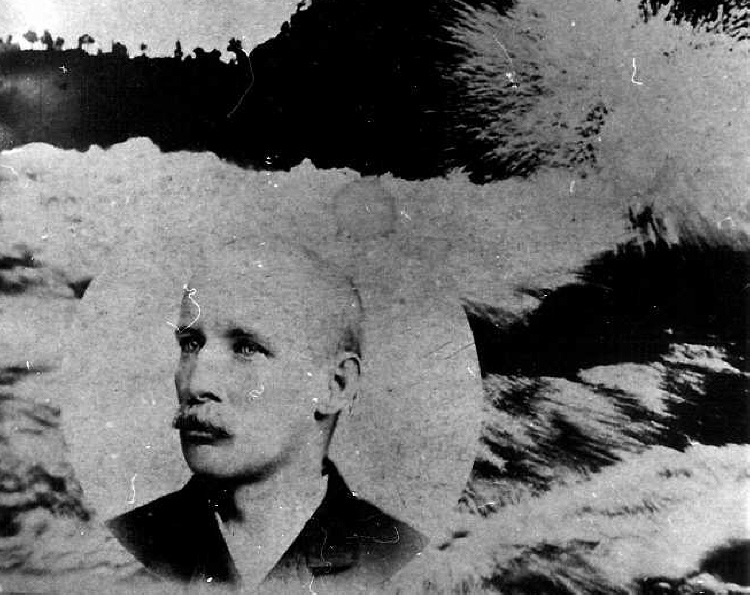
The river carries me here
As a babe on its island’s shores I play
Palms and fingers squish soft sand, feet kick,
On my back, sun warmed laps of waves.
Currents change with the seasons
Moody green, then blue; milky, then grey
Factory polluted in a haphazard way.
In autumn steam rises after first frost
Buckhorn’s creek freezes over in white
Our skates’ steel cuts crust to granules of light
We hear the creak of the sheet unable
to bear our weight; it cracks, we lie on the ice
crawl to shore; imagine the classmate trapped
head under the lip of ice, face turned blue
frozen in his boots, red cap and jacket;
first of our generation to pay the price
like deer seeking to drink fresh water
stranded on ice floe; eyes wide in fear
headed for the Rapids, then the Falls.
Sooner or later the current carries us all.
Source: Kathy Gilbert, 2021
Award winning poet Kathy Gilbert grew up in Niagara Falls, NY, attending St John de La Salle, Prince of Peace, and 66th Street schools before moving to Grand Island. She currently resides in Northern California where she received an MFA in poetry from San Francisco State University. In 2020, she published a poetry collection, Aprils Three. Other poems have appeared in Transfer, Anomalous, Swampwriting, The Steel Toe Review, The Community of Writers, and,Vistas & Byways. She is currently working on a book about Niagara Falls.
My apologies to Gwendolyn MacEwen’s family for initially publishing this poem on the Niagara Falls Poetry Project website without waiting for proper copyright permission. It has been removed at the family’s request.
The poem, about daredevil Karel Soucek, was published in Poetry Canada Review, vol. 8, no. 4, 1987
1
I thought there was nothing in the fields of light
that was not there in darkness
After breakfast in a quiet house
surrounded by pastures of new frost
my heart crouches believing
the next sound will be
something it can sing
2
This is my persistent nightmare
I jump into a shallow river
My feet sink in mud
to mid-calf, the top
of my head
just breaks the surface
It’s November:
too soon for ice
to preserve me
At noon I warm my hands at the apples
ripening on a window sill
3
The smell of cold through an open window
On the corner of my desk
is a print of a mother-goddess
in a black plastic frame:
Syria
Third century B.C.
The guide-book defines
Civilization
means living together
Sometimes a glancing blow
is the back of my wife’s hand
slowly down my thigh
4
And so it comes back to this
In Munich 1974
a man in a bar
said a cormorant
dropping from a cliff
is the soul of
whatever flung this
earth on the sea
Midnight on the highway through Perth County
wearing sunglasses against the headlights
I bite through the cold skin of an apple
Source: Waves vol 11, no 2 & 3, Winter 1983
Robert Billings, born in Niagara Falls, Ontario, and raised Fort Erie, became well known in Canadian literary circles as a poet, critic, teacher, and editor of Poetry Canada Review and Poetry Toronto. In 1983 he penned the poem “Epiphanies of the First Cold Day.” Epiphany 2 foreshadowed his eventual fate. In 1986 after his marriage broke down and bouts of depression hit him, he threw himself into the Niagara River. His body was not recovered until six months later.
Fellow poet and editor Herb Barrett paid tribute to Billings in his poem For Robert Billings
Watch the video At the Brink: A Personal Look at Suicides Over Niagara Falls by Michael Clarkson. Clarkson was a long-time friend of Robert Billings, who is one of the people discussed in the video.
The gas was on in the Institute,
The flare was up in the gym,
A man was running a mineral line,
A lass was singing a hymn,
When Captain Webb the Dawley man,
Captain Webb from Dawley,
Came swimming along the old canal
That carried the bricks to Lawley.
Swimming along –
Swimming along –
Swimming along from Severn,
And paying a call at Dawley Bank while swimming along to Heaven.
The sun shone low on the railway line
And over the bricks and stacks
And in at the upstairs windows
Of the Dawley houses’ backs
When we saw the ghost of Captain Webb,
Webb in a water sheeting,
Come dripping along in a bathing dress
To the Saturday evening meeting.
Dripping along –
Dripping along –
To the Congregational Hall;
Dripping and still he rose over the sill and faded away in a wall.
There wasn’t a man in Oakengates
That hadn’t got hold of the tale,
And over the valley in Ironbridge,
And round by Coalbrookdale,
How Captain Webb the Dawley man,
Captain Webb from Dawley,
Rose rigid and dead from the old canal
That carries the bricks to Lawley.
Rigid and dead –
Rigid and dead –
To the Saturday congregation,
Paying a call at Dawley Bank on the way to his destination.
Source: Betjeman’s Banana Blush: Sir John Betjeman the Poet Laureate Reads His Verse. Charisma Records, 1973.
Captain Matthew Webb was a world-renowned swimmer who attempted to swim the Whirlpool Rapids at Niagara Falls on July 24, 1883. He is buried in Oakwood Cemetery, Niagara Falls, New York. Read about Captain Webb here.
Joseph Avery Stranded on Rocks in the Niagara River. Daguerrotype by Platt D. Babbitt, 1853. Courtesy of the Library of Congress
All night long they heard in the houses beside the shore, Heard, or seemed to hear, through the multitudinous roar, Out of the hell of the rapids as ’twere a lost soul’s cries,– Heard and could not believe; and the morning mocked their eyes, Showing, where wildest and fiercest the waters leaped up and ran Raving round him and past, the visage of a man Clinging, or seeming to cling, to the trunk of a tree that, caught Fast in the rocks below, scarce out of the surges raught. Was it a life, could it be, to yon slender hope that clung? Shrill, above all the tumult the answering terror rung.
–William Dean Howells, “Avery”
Nothing else I could do. It’s my profession after all. Photographing Niagara Falls. Its views. Its visitors. And selling the resulting daguerreotypes. Quite successfully. Because I’m a damn good daguerreotypist. Ask anyone around here. And I’m on duty every day, 365 days a year. This day, July 16, 1853, I was waiting for tourists along the American Channel rapids when I saw three men struggling to maneuver their row boat to shore. They had been working on the big dredging scow anchored in the river. Their oars were broken. Or lost. I turned my lens toward them just as the boat capsized and I saw two bodies cartwheeling over the edge of the American Falls too fast for me to capture them in my camera. There was no sign of the third man — turned out to be a local fellow named Samuel Avery — until he leapt up like a fucking phoenix and sat astride a log cantilevered in a rocky shoal in the middle of the river. The rapids were way too loud for him to hear my hallo, so I waved at him with both arms, but he was likely too afraid to let go of the log to answer. He was riding the river like a scared girl on a runaway stallion, but luckily he kept still enough for me to create an historic photograph. Took an even longer time till someone thought to hitch a lifeboat to the Bath Island Bridge and send the boat down toward the man. Avery caught and climbed into the boat, but before I could re-focus, the rapids turned the lifeboat upside down, and Avery, thrown back into the river, met his fate just as his friends had hours before. Nothing else I could do. I returned to my hotel where I processed the plate and encased a dozen of the images for sale at my Point View stand. They sold well. They still do.
Source: The author, 2021
Listen to James Penha read the prose poem Platt with a short commentary.