Joseph Avery Stranded on Rocks in the Niagara River. Daguerrotype by Platt D. Babbitt, 1853. Courtesy of the Library of Congress
All night long they heard in the houses beside the shore, Heard, or seemed to hear, through the multitudinous roar, Out of the hell of the rapids as ’twere a lost soul’s cries,– Heard and could not believe; and the morning mocked their eyes, Showing, where wildest and fiercest the waters leaped up and ran Raving round him and past, the visage of a man Clinging, or seeming to cling, to the trunk of a tree that, caught Fast in the rocks below, scarce out of the surges raught. Was it a life, could it be, to yon slender hope that clung? Shrill, above all the tumult the answering terror rung.
–William Dean Howells, “Avery”
Nothing else I could do. It’s my profession after all. Photographing Niagara Falls. Its views. Its visitors. And selling the resulting daguerreotypes. Quite successfully. Because I’m a damn good daguerreotypist. Ask anyone around here. And I’m on duty every day, 365 days a year. This day, July 16, 1853, I was waiting for tourists along the American Channel rapids when I saw three men struggling to maneuver their row boat to shore. They had been working on the big dredging scow anchored in the river. Their oars were broken. Or lost. I turned my lens toward them just as the boat capsized and I saw two bodies cartwheeling over the edge of the American Falls too fast for me to capture them in my camera. There was no sign of the third man — turned out to be a local fellow named Samuel Avery — until he leapt up like a fucking phoenix and sat astride a log cantilevered in a rocky shoal in the middle of the river. The rapids were way too loud for him to hear my hallo, so I waved at him with both arms, but he was likely too afraid to let go of the log to answer. He was riding the river like a scared girl on a runaway stallion, but luckily he kept still enough for me to create an historic photograph. Took an even longer time till someone thought to hitch a lifeboat to the Bath Island Bridge and send the boat down toward the man. Avery caught and climbed into the boat, but before I could re-focus, the rapids turned the lifeboat upside down, and Avery, thrown back into the river, met his fate just as his friends had hours before. Nothing else I could do. I returned to my hotel where I processed the plate and encased a dozen of the images for sale at my Point View stand. They sold well. They still do.
Source: The author, 2021
Listen to James Penha read the prose poem Platt with a short commentary.
Ah there ! Niagara ! Again I’m here, I, Fowler, the tuneful tenor-poet Of Port Jervis, who just a year Ago did visit thee and afterward let ‡‡‡‡‡‡‡all the wide world know it ! Niagara ! Thou art a Jim-dandy ! Niagara ! Thou art a Jim-daisy ! Thou enthusest me like brandy Saturated with macerated rock candy. (Which, when traveling, always comes in ‡‡‡‡‡‡‡mighty toothsome and palatesome and ‡‡‡‡‡‡‡stomachsome as well as hygenically ‡‡‡‡‡‡‡handy !) Thou drives me nearly crazy With gruesome delight. Hail, hilarious sight ! What a grand dynamic, Panoramic, Diaphramic, Dioramic, Roaring, Pouring, Emerald frolic, Cosmoramic, Colic Thou art ! Great Scott ! This glorious spot Fills my heart With dithyrambic, Trochaic, iambic Measures And sesquipedalian treasures Of poeticalized pleasures That would knock the ancient poets limp and cold, But emotions like mine in ordinary language can never be satisfactorily told! Ah there ! Niagara ! Thou art a staggerer ! Thou sluggest all other earthly scenes, maudlin and silly ! Thou makest a man a poet, willy-nilly ! Thou despumatory Fulminatory, Thou. How Cam a man, who only dust is, Do thee justice ? Thou fallest. bawlest, squallest, callest To me with a willowy whoop of roars, And thy misty beard on the breeze to the zenith soars! I am an emphatic Niagaratic ! Like the wingful, flysome gull o’er thy curling crest I’d soar, But not with the cranks in a cask down thy Horseshoe plunge I’d pour ! O no ! I’m not built THAT way ! I do my raving on terra firmay ! Quite so ! Ah there ! Terrapin Point I see, So named because right there thee terror pins the tourist’s trembling knee! August Niagara ! The pun excuse ! But surely, thou dost me so enthuse That scarce I know If, sitting down, I stand, or standing still as ‡‡‡‡‡‡‡Stock or stone I swiftly onward, roundward go ! But now, Niagara, my time is up, my pass is ‡‡‡‡‡‡‡out, the walking’s bad twixt here and ‡‡‡‡‡‡‡P. J., my credit’s poor among these ‡‡‡‡‡‡‡Canucks who glower on me, and these ‡‡‡‡‡‡‡Fierce heesmen who look, wise laws, ‡‡‡‡‡‡‡like sat-down-upon criminals, and I ‡‡‡‡‡‡‡must say more adieu ! Adieu ! Adieu ! Next year I’ll try again to come and visit yieu !
Jedediah Prendergast Merritt wrote a long poem on Prince Edward’s visit to Canada in 1860, bound with a number of other poems that he wrote. This page contains the introduction to the poem, and the parts relevant to the Niagara area. The complete book can be viewed here on the Hathi Trust website
Introduction
Through glare and dust at evening’s hour Say, you have reached the gorge of power. The headlong haste they did pursue Arrested, you a picture view.
Edward, Prince of Wales, at Niagara Falls, 1860. (Edward is in white pants with one leg resting on rock) Photo by Platt D. Babbitt. Image courtesy of Niagara Falls Public Library.
A picture to which the opposing rays, Of Sol on moving water lays Noiseless and clear, without a glare — Unawed, as when too close you are.
Be not in haste to approach the wonder, But like the lightning without thunder, Arrest your course, view it awhile, And with my lay your time beguile.
Ye denizens of cities, list, I pray To this rough measure of a sylvan lay Though one from foreign lands in this I bring, ‘Tis not of courts, a people rude I sing.
Forget not ye who now in palace car, Ride swiftly, smoothly to the scene from far. How hard it was the way for them to tread, Who o’er this forest darkened road first sped,
Think not this epic for the scene too high, Niagara can with all the Grecian valleys vie ; In this the thought directed to as far between As is this spot from the farthest you have been.
When up the gorge a mile or two you ride, And reach this wonder on the Canada side, And while from coach to elevator step, Prepared to see the myriads of water leap.
Look back and see yon gossamer span, Work, great as earth displays of man ; A train disturbs the cataract’s roar, Soon it rolls on — that sight is o’er.
It’s past; and grandeur as of yore Reigns, ruler of the scene once more. Improvements cease to intervene. When cataract alone is seen.
Regard again a Fall whose power, Existed ages as this hour, And will to future ages last, As strong as now, and as the past.
What spot imposing more to stand, And drink the water from your hand, While Iris tips the rough rocks now, And leaves are waving round your brow.
No vigorous shoot obstructs the way, No wood’s inhabitant strikes with dismay, Cleared all those terrors from the road O’er which in their reverse our fathers trod.
Part II
Visit to Niagara
With gracious thanks the Prince replied, And tokens worthy, more supplied. The eastern wind had changed to north, Tossed were the billows in their wrath.
He who had steered upon the ocean His ship, now felt the wild commotion While buffetting opposing wind, The light of day had ne’er declined.
When winding round a point once more, They see an opening in the shore, Briefly conflicting waves oppose, And then the barque find calm repose.
A greeting on the land they find, To which they were not disinclined ; The hospitality of their host they test, Nor are due honors spared their guest.
A friendly table broad is laid, And dainties from afar displayed, The forest did its game afford, Rich venison crowned the ample board.
The friendly greeting hand first shook. The feast the royal toast partook, The night with dance and cards dispose, And daylight dawned before repose.
The morn had brought them from the fort, Where stored within its ample halls, Spoils of the traders who there resort For safety to its staunch stone wallst.
Where naval men before resort, In council grave the Governor sat, Nor had the council raised yet, Debating on the new Land Grant.
Nor they alone, the Indian band, To meet their eastern friends resort, Together with one heart and hand, The title to their land support.
The Governor sat to say a word, Respectful stood they all, Completely still was every sound In that debating hall.
You left your home and country, The land where you were born, The happy land of childhood, Of manhood’s early dawn.
The rock-clothed, grassy hills, The waving corn-grown plain, Where naught reached you of the ills Which now to you remain.
And well you summed the cost, You would not bear the ready taunt Nor brook, when all was lost, To have the scornful finger cast.
Tory is he from old and young, Expressed with laugh and jeer ; The thought that through your strong frames run Was not the thought of fear.
Then to the wilds and to the stream Your precious charge you trust, And look unto the western realms For the reward that’s due the just.
Towards them and their dark isles then You cast your troubled, anxious ken, And feeling that to keep you up You need all — be vigorous men.
Butler Johnson, with you I leave Claus, Tenbroeck ancl Paulding too, I trust in friendship you’ll remain, And each to all prove true.
Wait yet I fear my trusty friends When all finished in our cause, The differences of settlers Oft will cause to break the laws.
Give ye my friends the Sheriff aid, Regard ye his command, The laws when made must be obeyed, Then lend a helping hand.
Nor fear in want to suffer here, For barges still will ply Up every creek, up every pond, Your wants they shall supply.
I now toward our new bourne tend. Beverly, Fay, Jones with me, Brant now, once Johnson’s friend, Our firm and staunch ally.
A shout arose from the brave band, A shout that rent the skies, And towards the chief who rose, Alike were turned all eyes.
Simcoe’s Rangers.
A gregarious crowd around the door With various surmises the scene rehearse, They filled the ample court before, And of the coming grants discourse.
Fiercer now the contest wore, For Simcoe’s about to take his way Westward, to lay out acres more, And make the acres broad his followers pay.
A noise is heard, a settler calls, A hurrying here and there they come, Adown the stairs and through the hall, Still’d was the sound and hushed the hum.
Nor pageant’s wont to grace the scene, Nor men with lace, scarlet and blue, Staffmen and voyageurs I ween, All wait, the great man’s will to do.
But first in visage doth appear, A veteran band in martial mien, Their steeds are poor, tarnished their gear ; But rare a goodlier band is seen.
He passed on until the serried band Before the house had met his eye, Saluting with uplifted hand, With eye elate, which all did spy.
He turned and spoke one other word, Respectful stood they all, And as he spoke there could be heard The noiseless pin drop fall.
Companions of my arms, he said, I know the hardships that ye bear, I know the heart that keeps you up, I know the men ye are.
But now towards the west I go, For you my friends new land to bear, And for my faithful followers, so New and happy homes prepare.
First to the Mohawk station With blankets a good store, Nor ever yet has Britain’s band Forgot the Sagamore.
The pressing crowd the chief surrounds, Sympathetic glances cast. And make the neighboring banks resound With shouts, that echoing last.
He mounts and westward takes his way The loud huzza from the veteran band Arose, and all him heard do pray Success attend bold Simcoe’s hand.
For a brave man was “Simcoe,” And a brave band were they, Strive they till the strife is o’er, And then the work repay.
They felt the toils of war require From one that doth command Returns, and well did Simcoe pay The true devotion of his band.
For soldiers fight and soldiers die. Till they decide the day, And then the sword into a plough, The spear a hook make they.
PART III.
Voyage Up the River
Niagara, may I, as I onward go, My verse like thee in smoother numbers flow, Catch the refrection of thy azure wave, Some truth recall, and from oblivion save.
Observation from the realm of mind, Suggested and in this task designed, Increase the interest, and attention gain, As voyaging onward we reach the boundless main.
Into a strong raiment brought, And like a garment of fine tissue wrought, Or built on nature’s ground, consistence gain, And of a nation’s birth a monument remain.
A people’s chronicles, compared how small, Like the first streamlet of thy mighty fall, Convince the mind and stir the sympathies, Catch thy reflection from the azure skies.
The impression stamped as vivid, but as true As thy far font, beyond the Huron blue, Nor at the present we alone remain, liut like thee travel till we reach the main.
——————————————————————
At length a barge the party reached, To mount the stream each nerve was stretched, And when the centre flood was gained, Slow progress upward they attained ;
Why was’t? The same spot on the shore Added regret to them the more ; And when impatience forced to wait, Reproached the current with their fate.
The barge propelled by laboring oar Glides by itself along the shore, The change at once awakes surprise, The question and reply arise.
The guide at hand to his desires, The knowledge gives that he requires ; The current passing downward ever By opposing points is turned up river.
Where doth this chasm vast disclose? Where issuing out, the water flows, A whirlpool sweeps with noiseless might, That stoutest hearts it might affright.
For tree or barque within its eddy Sails round and round in circles steady, And once in this, the shore again. Your bark nor you shall e’er attain.
Fort Niagara 100 Years Ago
The sun was rising, and the hour When thought exerts its magic power, His rays cast on Niagara’s banks Revealed its trees in neighboring ranks.
The cloud of distant cataract gave Back to the sight a scene less grave. Edward, who yet had much to learn Of wild woods, stands upon the stern,
Ardent and bold the ocean’s child He’d trust the deep, and shun the wild ; His friend and guide those thoughts opined, Then to remove his skill designed.
See you where trees less dense in ranks, Betoken clearings on the banks. To one like this we turn our prow, Patiently wait, we go not now.
Wait till I tell you how we fought, And gave the French their final rout, Niagara round — leagured we stand, Decided at the Chief’s command.
Now as July passed quickly by, And “Sol” darts arrows from the sky ; And when men look in vain for aid The dubious trial of the sword assayed.
How lined in ranks promptly they try The issue ; then the Frenchmen fly Back to their fort, and there Await the verdict of protracted war.
And then the sun the scene illumed, And then our force the siege resumed ; At length the aid long looked for comes ; No greeting shout, no beating drums ;
But stealthily their guile pursue, The fort to gain, and shun our view. The sentinel of outpost stands, With gun reclining in his hands ;
A crack is heard from neighboring wood, His ear it catches, that bodes no good, It is the deer — listless he droops. Nor heeds the approach of hostile troops.
A pause ensues, and there is heard no more, Naught but the sound of cataract’s roar, His thoughts are wandering forth afar, To Mohawk’s banks, where naught’s of war ; The solemn music to his ear Seems like the tread was used to hear.
Ere war was earnest, and idle boys To train were wont, with boisterous noise ; And all the neighborhood resort, To enjoy a day of country sport.
The clouds break off, the wind once more Drives inward to the neighboring shore, They seem to drive those trees along, Like them a dense and serried throng A cannon from the fort awakes his trance. Before him sees the marshal’d hosts of France. He from the bark to shore doth land. And following goes the portage band, The Falls not yet had met his eyes, The voyage pursuing, Edward hies.
Fire-Water and Falling Water
Forward the word, portage half passed, And men and oxen painfully tasked ; When nearing now the cataract meet A denizen of the woods complete. Accosted fair, the wild man stood, And half laid off his savage mood. When we, the red men, held command, Silence prevailed o’er all the land, Nor scared the wild bird from the wave, Nor ceased the deer his sides to lave, The white man trod along the way, And then was drove our game away ; Their constant passing by the flood ; Deprived us of our ample food; The buffalo binds he to his load, And trails trees on where once men trod.
You see those bleached bones through the wood ! The remnants of the buzzard’s food ; We met them once on their careless way, And then our wrongs did amply pay, The sight was that the blood to freeze, And yet the savage seemed to please, As spake his form, delate with pride, The voyageur’s load he casual spied ; Kegs with their stores, along the track Were borne in wagons, and on back.
Was changed the native of the soil, As gazing on the voyager’s toil. “Fire-water” up the billows came, Have scarcely left us now a name ? If with you came this pest not here We would not now so disappear ; Our greatest foe made us forlorn, A nation by its breath is gone. Finished his speech, his gun he takes And through the woods quick steps he makes ; And like his race whose end so near, Through the dark woods to disappear.
——————————————————————
As forward of his convoy goes, The presence of a fall he knows. Needless to say surprise, not wonder, A mountain seemed as torn asunder, Like a vision before him passed, The scene upon his eye so vast.
Resounding flood, surrounding wood, Astonished as at distance stood — When first to traveller’s anxious eyes Appeared this fall — vast thoughts arise.
Forgive if to his ‘stonished ken More grand appeared the cataract then ; Forgive if as too careless pass’d The first explorer’s views were vast.
——————————————————————
The convoy came, the camp they make, And of a generous supper take ; Then each one’s course he does pursue, And separate round the Falls they view.
A ladder of a pine tree made, To reach the foot affords its aid, They ne’er before the like did see, Till then, such grandeur, all agree.
Back to Niagara and Wild Flowers
Late in the day the company find The clearing past in woods that it confin’d. As now the escort to the wood Parting, upon the clearing stood, Struck at all sights when all are rare, And idly sauntering here and there.
And backwards turned along the road, No more in clearing friends are heard, It contained a cottage hid with green ; Tho’ humble, admired was the scene, The cottage all that summer day Detained the company. And away Scarce could the pleasant party break, And onward still their journey take.
Long at the landing lay the barge, Long there his crew true to their charge ; And still it seemed as if a spell Had bound him — and to say farewell, Why still so hard, he could not tell.
——————————————————————
You ask a bouquet to bestow Of flowers that in our wilds do grow, When summer cheers the glorious scene With blossoms interspersed with green.
Accept this simple nosegay here, From one not distant would appear, No perfumed flowers give I to you, Our flowers are scentless but yet true ; They smell but slight, but yet they show As deep a dye as those you grow. Despise not the productions of the wild. The cultivated man was once a child. If this, my floral gift, should please, A liberty allow to add with these ; As they may meet due favor in your eyes, A sentiment conveyed may also prize. So self-denying acts may move, And approbation follow fruits of love. Grant me the wish, as summer crowns the year Changes flower to fruit the sight to cheer, As the revolving season onward flows, A winter garnished with richest fruit that grows.
The day was breaking, and the time When nature shows in all her prime, And Edward now the journey o’er, Wished through wilds he’d wander more. Musing thus he inward spake, Shall commercial toils this silence break ? Thought oft how men would down the spell, And business on the affections tell.
Then from the camp ere “Sol” arose To break the scene of deep repose ; There appeared a tenant of the wild Along the bank, free nature’s child, From the high steep she quickly sped And reached the fort with agile tread.
Surprised and pleased he views once more The siren of the day before As quick she pass’d, who art thou, maid ? Sir William’s daughter, sir, she said. Retarded, brief her onward speed, And to his short discourse gave heed. Where go ye now ? where do ye hie ? To Brant’s quarters was the reply ; Where they prepare the warlike feat, And give our father’s son a treat. From thence go to the “Miami,” From thence to the Auglaize ; Where lit up is the council fires Our Indian bands to raise.
A sigh escaped — he said no more, This very day I leave your shore, Never to see this land again, I take my passage o’er the main. My Progeny may view this land, I ne’er again shall press your strand. One look she gave, the “traveller” learned The interest he had early earned. He lingers — saddened at the thought, And loth to break the feelings wrought.
Not long he mused until the sound Arose from sleeping tents around Of a hasty meal despatch is made, And to return the troops arrayed.
Departure by Lake and River
The farewell taken, the parting o’er, Adieus returned from boat to shore : As they upon the billows bound, Strains like this from shore resound.
Frail bark, my heart beats in pity for thee, Unknowing the fate thou mayest see. With bustle and shouting, with running and noise, Your attention engages and your time employs ; But when all is finished, the white sail ye raise, And you cast on the land the last parting gaze, You think of the dangers to your far distant home, Talk of its comforts when no more you will roam, The gulf lies between you with its dreary alarms, The perils of ice and its dark winter storms, But trust ye in Providence, He will procure A landing of safety, a haven secure, The pathway of honor still may you pursue, More enduring than power will it prove to you ; An obelisk firmer than brass will be found, A name than emblazoned more ample resound.
J.P. Merritt from Page’s 1876 Historical Atlas of Lincoln & Welland Counties
Source: J. P. Merritt. Canada Seventy Years Ago, or, Prince Edward’s Visit to Niagara. 3rd. ed. St. Catharines, 1860.
While at Niagara Prince Edward visited Laura Secord and rewarded her for her service in the War of 1812. Read Visit of the Prince of Wales to Laura Secord by Sarah Anne Curzon.
Erika Meitner is the author of five books of poems, including Ideal Cities (HarperCollins,
2010), which was a 2009 National Poetry series winner; Copia (BOA Editions, 2014); and
Holy Moly Carry Me (BOA Editions, 2018), which won the 2018 National Jewish Book
Award in Poetry, and was a finalist for the National Book Critics Circle Award. Her sixth
book of poems, Useful Junk, is forthcoming from BOA Editions in 2022. Meitner’s poems
have been anthologized widely, and have appeared in publications including Best
American Poetry, Ploughshares, Virginia Quarterly Review, The New York Times
Magazine, The New Republic, and Tin House. Other honors include fellowships from
MacDowell, the Wisconsin Institute for Creative Writing, the Virginia Center for the
Creative Arts, the Hermitage Artist Retreat, and Blue Mountain Center. She was also the
2015 US-UK Fulbright Distinguished Scholar in Creative Writing at the Seamus Heaney
Centre for Poetry at Queen’s University Belfast. Meitner is currently a professor of English
at Virginia Tech.
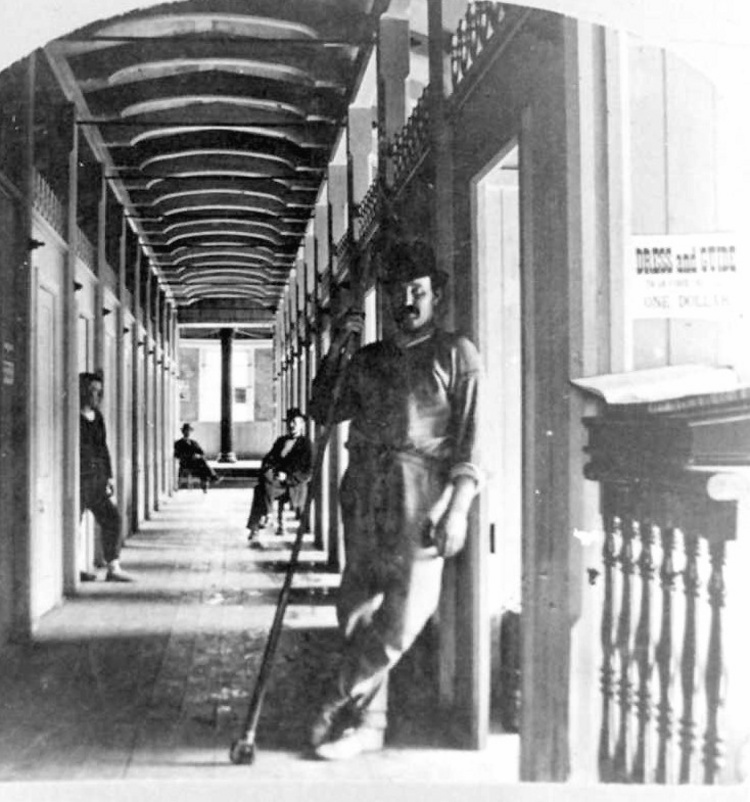
Guide Thomas Conroy Standing by the Dressing Room of the Shadow of the Rock Building. Photo by George Barker. Image courtesy of Niagara Falls Public Library
The sun looks out of a cloudless sky ; ‡‡The winds are drifting the apple-blows
That over the grass like snow-flakes lie ;
The oriole wooes his mate as they fly ; ‡‡And William McCullough to labor goes.
A prayer is warm in the old man’s heart, ‡‡A song is quivering on his tongue ;
As he busily plies his wonted art
He watches the arrowy rapids dart ‡‡Under his scaffolding, safely hung.
A moment more and under the tide ‡‡Of wrathful waters his form is lost !
The river fiends fasten on his every side —
They pluck at his beard, they gibber and chide ! ‡‡He is blinded and deafened and pelted and tost !
Weary and wounded, all breathless and sore, ‡‡More than half dead he is hurried away,
Close to the brink where the great waters pour,
Heedless and headlong with terrible roar, ‡‡Into a vortex where never was day !
What can prevent him ? O Father Supreme ! ‡‡Darkness like this thou alone can illume !
See ! What is that in the turbulent stream ?
It is a glimpse — a half-comforting gleam ‡‡Of floating grey hair mid the circling spume !
Yes ! he is clutching with half palsied hand ‡‡Yon God-given guerdon — a pillar of stone —
He whispers with Death and looks toward the land
Where he never again with his fellows may stand’ ‡‡Who powerless must leave him to perish alone !
But lo ! who is coming with masterly stride, ‡‡Pride on his forehead and strength in his frame ?
Tom Conroy, the guide, who was never defied,
He laughs at the danger — and braving the tide ‡‡Is bound with a cord to the chariot of Fame.
Strong was the rope that was fast to the shore, ‡‡And under the coil was a heart big and brave —
Aye, braver to-day than ever before,
He reaches the rock — and like Perseus of yore — ‡‡He rescues his friend from the fiend of the wave !
When the names of our heroes are written or sung, ‡‡We will chant your name Conroy in musical stave
When palsied your arm and silent your tongue,
The child now unborn, shall hear how you flung ‡‡Yourself in the wave, a comrade to save !
Source: Niagara Gazette, June 10, 1874
Read an article on the rescue of William McCullough by Tom Conroy from the Buffalo Evening Courier & Republic, June 2, 1874
John Tyndall visited Niagara Falls, and in the chapter “Niagara” of his book Fragments of Science (1879) he tells of hiring Conroy as his guide. About a year after Tyndall’s visit, the rescue of William McCullough took place. Tyndall wrote a postscript to the chapter:
A year or so after I had quitted the United States, a man sixty years of age, while engaged in painting one of the bridges which connect Goat Island with the Three Sisters, slipped through the rails of the bridge into the rapids, and was carried impetuously towards the Horse- shoe Fall. He was urged against a rock which rose above the water, and with the grasp of desperation he clung to it. The population of the village of Niagara Falls was soon upon the island, and ropes were brought, but there was none to use them. In the midst of the excitement, a tall powerful young fellow was observed making his way silently through the crowd. He reached a rope ; selected from the bystanders a number of men, and placed one end of the rope in their hands. The other end he fastened round himself, and choosing a point considerably above that to which the man clung, he plunged into the rapids. He was carried violently downwards, but he caught the rock, secured the old painter and saved him. Newspapers from all parts of the Union poured in upon me, describing this gallant act of my guide Conroy.